
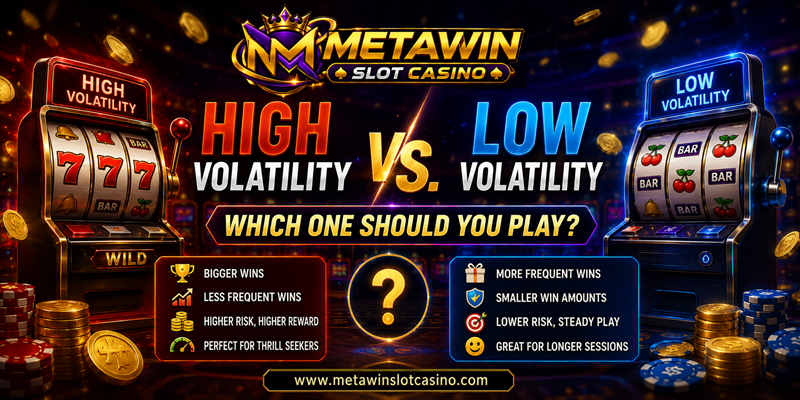
High Volatility vs. Low Volatility Slots: Which One Should You Play? When you navigate through digital casino platforms, you quickly realize that different slot machines exhibit distinct payment behaviors. For instance, specific titles grant frequent, smaller prizes that keep your account balance remarkably steady.
High Volatility vs. Low Volatility Slots: Which One Should You Play?
On the flip side, alternative slot titles endure prolonged periods without any winning payouts before unexpectedly awarding a massive prize. Gambling experts attribute these dramatic operational contrasts to a core mathematical principle known as slot volatility or variance.
By mastering the concept of slot volatility, you can select specific titles that align seamlessly with your session goals, available capital, and personal risk comfort.
What Is a Mean of Slot Volatility?
In modern casino mathematics, volatility defines the intrinsic financial exposure tied to a specific slot machine model. While a game’s Return to Player (RTP) metric calculates how much overall funds return to participants over millions of automated spins, volatility determines the exact rhythm and distribution of those rewards.
Put simply, variance controls both the likelihood of hitting winning combinations and the potential size of those rewards. Therefore, two distinct titles featuring identical 96% RTP figures can deliver completely different user experiences based on their programmed variance parameters.
+-------------------------------------------------------------------------+
|                         SLOT VOLATILITY SPECTRUM                        |
+------------------------------------+------------------------------------+
|        LOW VOLATILITY SLOTS        |       HIGH VOLATILITY SLOTS        |
+------------------------------------+------------------------------------+
|  • High Hit Frequency              |  • Extended Dry Spells             |
|  • Modest Payout Values            |  • Exponential Win Potential       |
|  • Minimal Capital Risk            |  • Elevated Capital Exposure       |
+------------------------------------+------------------------------------+
Exploring Low Volatility Slots
Low volatility slot machines center their core design on stability and sustained playtime. Consequently, these titles utilize software engines that trigger winning payouts every few manual turns.
Key Characteristics of Low Volatility Games
-
Frequent Payout Events: You will trigger winning combinations regularly, often every 3 to 5 active spins.
-
Smaller Reward Returns: The generated prizes usually equate to micro-multipliers, ranging from fractional bets up to 10x your total stake.
-
Base Game Dominance: The majority of your returns originate from standard reel spins rather than intricate secondary bonus rounds.
Ideal Players for Low Volatility Titles
Low volatility slots perform exceptionally well for recreational bettors who desire engaging sessions without rapid financial drawdowns. Furthermore, these games offer a strategic advantage when clearing casino bonus rollover conditions. Because your total balance fluctuates minimally, your starter funds endure significantly longer.
Exploring High Volatility Slots
Directly opposing low-risk titles, high volatility slots target enthusiasts who prioritize significant maximum payout caps. Naturally, this massive prize ceiling requires players to accept elevated overall financial exposure.
Key Characteristics of High Volatility Games
-
Infrequent Winning Spins: Players routinely encounter extended sequences of non-paying spins.
-
Elevated Multiplier Potential: Major jackpots, prize multipliers, and extra feature rounds can award thousands of times your original wager.
-
Feature-Centric Payouts: Software engineers concentrate the vast majority of big wins inside scarce extra spin features, multiplier reels, or complex Megaways formats.
   Low Volatility Balance Curve (Controlled / Minimal Variance)
   [ $100 ] ---> $102 ---> $98 ---> $105 ---> $99 ---> $101

   High Volatility Balance Curve (Aggressive / Dynamic Variance)
   [ $100 ] ---> $85 ---> $60 ---> $40 ---> $350 (Bonus Hit!) ---> $320
Ideal Players for High Volatility Titles
High volatility releases cater best to experienced bankroll managers who possess adequate capital along with strong psychological discipline. If your primary objective involves chasing life-changing prize caps or maximum multiplier hits, high volatility slots deliver the ideal engine. However, you must prepare mentally and financially for prolonged dry spells.
Medium Volatility: The Balanced Alternative
If low volatility titles feel overly monotonous and high volatility slots appear excessively punishing, medium volatility slots present a practical compromise.
These hybrid games merge steady base-game payouts with reasonable bonus multiplier potential. As a result, medium volatility slot models represent the most widespread offering across online software portfolios today.
How to Identify a Slot’s True Volatility
Because game developers do not always display exact variance ratings on the primary play menu, you can evaluate a slot’s volatility by monitoring a few specific indicators:
-
Analyze Symbol Paytables: Examine the payout values for top-tier symbols. If five matching premium symbols yield only 10x to 20x your wager, the game utilizes low volatility. If that same combination pays 100x or higher, you are examining a high-volatility game.
-
Evaluate Special Mechanics: Titles containing progressive jackpots, unlimited multiplier ladders, and cascading wild symbols almost universally operate on high volatility frameworks.
-
Review Developer Documentation: Leading software studios now provide clear 1-to-5 or 1-to-10 variance meters directly within their embedded game rules menus.
Side-by-Side Comparison
To streamline your final selection, evaluate your personal gaming metrics using the comparative table below:
| Feature Dimension | Low Volatility | Medium Volatility | High Volatility |
| Risk Profile | Minimal | Moderate | Substantial |
| Payout Frequency | Very High | Balanced | Low |
| Average Win Size | Modest | Medium | Large to Massive |
| Bankroll Longevity | Extended & Steady | Moderate | Highly Fluctuating |
| Primary Utility | Bonus Rollover & Chill Play | Routine Gameplay | Jackpot Chasing |
Final Strategic Takeaways
Ultimately, neither volatility model holds an absolute advantage over the other. Instead, your choice must hinge on your available bankroll, personal risk preference, and session expectations.
-
First, choose low volatility slots if you operate with a tight budget, prefer low-stress play, or need to complete promotional bonus requirements efficiently.
-
Second, select high volatility slots if you maintain a robust bankroll, practice strict emotional control, and target substantial win multipliers.
-
Finally, always enforce systematic bankroll limits regardless of your chosen variance category to ensure a responsible and sustainable gaming experience.
About the Author